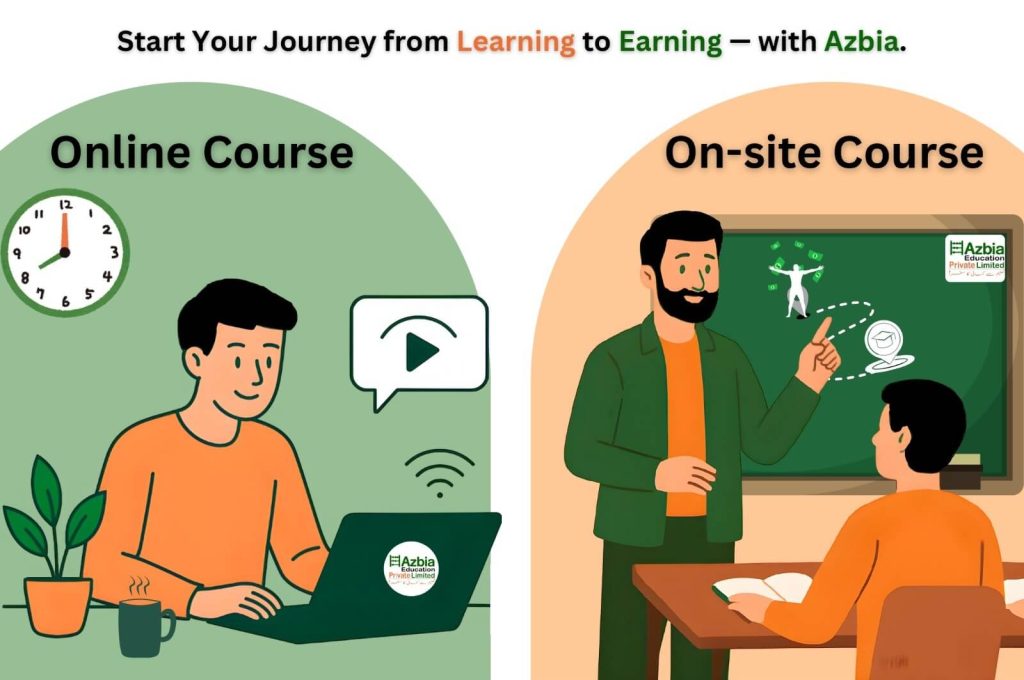
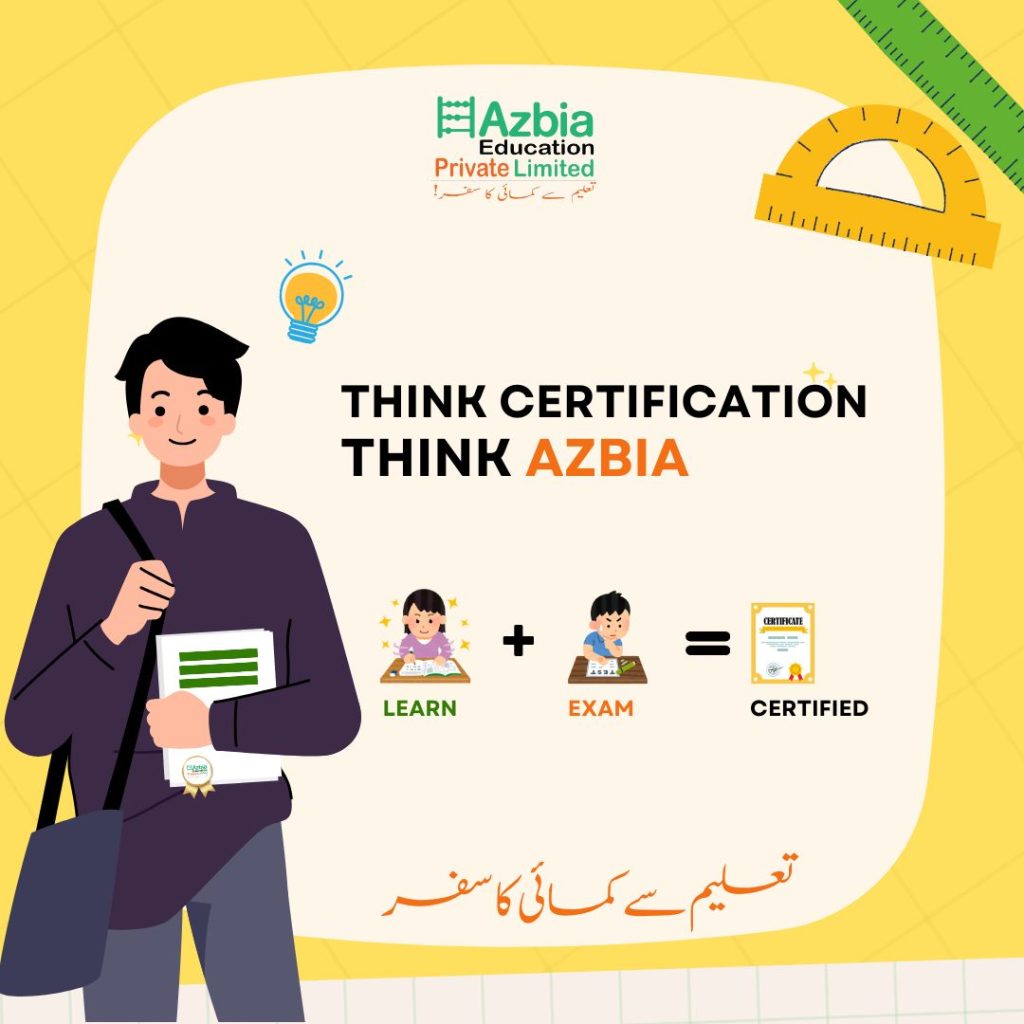
At Azbia, we aim to equip learners with practical skills through our range of short courses. These programs are designed to enhance career opportunities and provide learners with the flexibility to choose the mode of learning that suits them best.
On-Site Courses (Free): Conducted in collaboration with NAVTTC, BBSYDP, and Kamyab Jawan Pakistan, these physical classes are completely free of cost and focus on hands-on training for professional growth.
Whether you are looking to learn online at your own pace or benefit from free, practical on-site training, Azbia provides opportunities that help you grow and succeed.
تعلیم سےکمائیکا سفر
Select Course Type
👉 Enroll today and take the next step toward your future with Azbia!
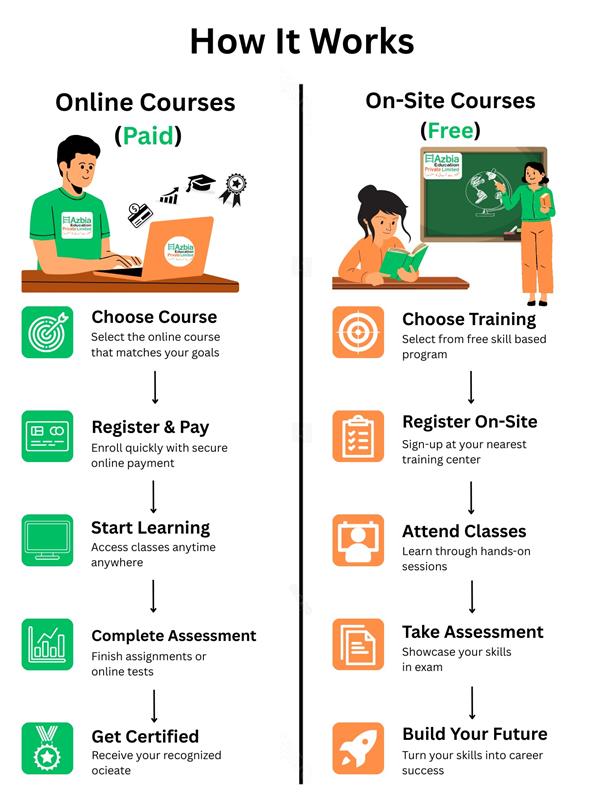
HOW IT WORKS
Choose Course
Select the online course that matches your goals
Register & Pay
Enroll quickly with secure online payment
Start Learning
Access classes anytime anywhere
Complete Assesment
Finish assignments or online tests
Get Certified
Receive your recognized ocleate
Choose Training
Select from free skill-based program
Register On-Site
Enroll quickly with secure online payment
Attend Classes
Learn through hands-on sessions
Take Assessment
Showcase your skills in exam
Build Your Future
Turn your skills into career success
Virtual College
Mobile College
Free Courses
BENAZIR UNDERGRADUATE
Education beyond intermediate is one of the ways to overcome poverty. However, access to higher education is itself distributed very unevenly. For example, only 0.4% of the children from the lowest income quintile (from the relevant age cohort)
Education beyond intermediate is one of the ways to overcome poverty. However, access to higher education is itself distributed very unevenly. For example, only 0.4% of the children from the lowest income quintile (from the relevant age cohort)
Education beyond intermediate is one of the ways to overcome poverty. However, access to higher education is itself distributed very unevenly. For example, only 0.4% of the children from the lowest income quintile (from the relevant age cohort)